

As an Amazon Associate we earn from qualifying purchases.
- Best overall: Celestron StarSense Explorer DX 130AZ Telescope
- Best budget: Celestron Cometron 7×50 Binoculars
- Best premium: Celestron NexStar 6SE Telescope
- Celestron Nature DX 8×42 Binoculars: Celestron SkyMaster 15×70 Binoculars
- Choose binoculars for portability, wide views, and daytime wildlife; choose a telescope for greater detail on the Moon and planets.
- Celestron Nature DX 8×42 Binoculars suit travel and general outdoor viewing.
- Celestron StarSense Explorer DX 130AZ Telescope pairs a 130mm aperture with a smartphone-assisted sky-finding system.
- Celestron NexStar 6SE Telescope is the premium pick for shoppers who want computerized object locating.
- Compare optical design, setup, portability, and included accessories before choosing a Black Friday 2026 astronomy gift.
For most first-time skywatchers, Celestron binoculars are the easier starting point; for close-up lunar and planetary views, a Celestron telescope is the better fit. Celestron Nature DX 8×42 Binoculars offer versatile daytime and night-sky viewing, while Celestron StarSense Explorer DX 130AZ Telescope brings a 130mm aperture and guided smartphone navigation to backyard astronomy.
I researched and compared specs, reviews and owner feedback to build this Black Friday 2026 guide around real shopping priorities: what you want to observe, how much setup you enjoy, and whether you need optics that travel easily. The Best bet for a single all-around astronomy instrument is a capable telescope; for casual viewing with little setup, binoculars are the simpler choice. Read the product picks and comparison table to match the format to your plans.
How We Picked
- Optical specifications: We compared magnification, objective or aperture size, and focal length where relevant.
- Usability: We considered setup effort, stability needs, sky-finding features, and whether the instrument suits beginners.
- Portability: We weighed form factor and typical carrying convenience for travel, hikes, and backyard sessions.
- Use-case range: We included picks for wildlife, general travel, wide-field astronomy, and observing the Moon and planets.
- Owner feedback: We reviewed published customer impressions and product information for recurring strengths and limitations.
Comparison Table
| Product | Best for | Magnification or focal length | Objective diameter or aperture | Field of view or mount |
|---|---|---|---|---|
| Celestron Nature DX 8×42 Binoculars | Travel and wildlife | 8x | 42mm | 7.4° field of view |
| Celestron SkyMaster 15×70 Binoculars | Wide-field astronomy | 15x | 70mm | 4.4° field of view |
| Celestron SkyMaster 20×80 Binoculars | High-magnification binocular views | 20x | 80mm | 3.2° field of view |
| Celestron Cometron 7×50 Binoculars | Entry-level stargazing | 7x | 50mm | 6.8° field of view |
| Celestron StarSense Explorer LT 80AZ Telescope | First telescope | 900mm focal length | 80mm | Altazimuth mount |
| Celestron StarSense Explorer DX 130AZ Telescope | All-around backyard astronomy | 650mm focal length | 130mm | Altazimuth mount |
| Celestron NexStar 6SE Telescope | Computerized observing | 1500mm focal length | 150mm | Computerized altazimuth mount |
Best Picks Reviewed
#1
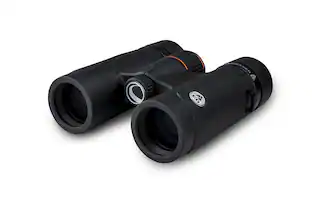
Celestron Nature DX 8×42 Binoculars
The Celestron Nature DX 8×42 Binoculars are the best all-around pick for travelers and wildlife watchers; 8x magnification keeps viewing manageable while the 42mm objectives gather light.

Best for: Travel, wildlife, and casual skywatching
- Magnification
- 8x
- Objective diameter
- 42mm
- Field of view
- 7.4°
- Eye relief
- 17.5mm
- Useful for daytime wildlife and wide star fields
- Waterproof construction
- Comfortable eye relief for many glasses wearers
- Does not provide telescope-level detail on planets
Are Celestron Nature DX 8×42 Binoculars worth buying on Black Friday 2026?
Yes. Celestron Nature DX 8×42 Binoculars are a versatile choice for wildlife, travel, and wide-field sky viewing. Their 8x magnification is easier to hold steady than stronger binoculars, and the waterproof build suits outdoor use.
See today’s Black Friday price on Amazon
#2
Celestron SkyMaster 15×70 Binoculars
The Celestron SkyMaster 15×70 Binoculars are the best for budget-conscious astronomy beginners who want large, bright views; 70mm objective lenses collect substantial light.
Best for: Bright wide-field astronomy on a budget
- Magnification
- 15x
- Objective diameter
- 70mm
- Field of view
- 4.4°
- Exit pupil
- 4.7mm
- Large objectives suit night-sky viewing
- Wide binocular view is intuitive for beginners
- Useful for terrestrial viewing from a fixed position
- A tripod is recommended for steady views
Are Celestron SkyMaster 15×70 Binoculars worth buying on Black Friday 2026?
Yes. Celestron SkyMaster 15×70 Binoculars offer a straightforward route into wide-field astronomy, with 70mm objectives and 15x magnification. Their size and power make a stable tripod especially helpful for comfortable, shake-free observing.
See today’s Black Friday price on Amazon
#3
Celestron SkyMaster 20×80 Binoculars
The Celestron SkyMaster 20×80 Binoculars are the best for experienced observers who want powerful binocular views; 20x magnification reveals more detail across bright celestial targets.
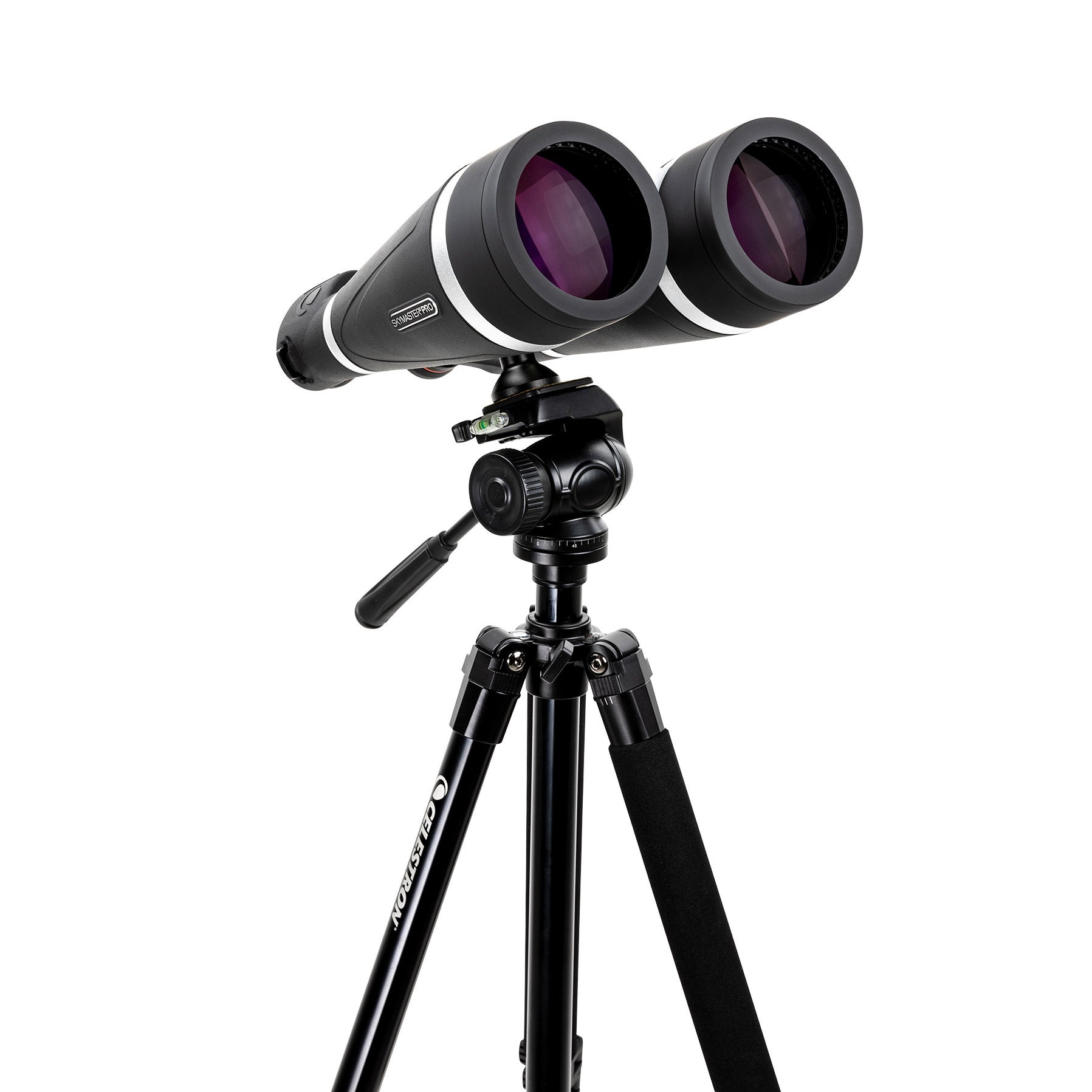
Best for: High-magnification binocular astronomy
- Magnification
- 20x
- Objective diameter
- 80mm
- Field of view
- 3.2°
- Exit pupil
- 4mm
- Large 80mm objectives gather light
- Strong magnification for binocular viewing
- Good fit for observing from a fixed location
- Heavy body calls for a sturdy tripod
Are Celestron SkyMaster 20×80 Binoculars worth buying on Black Friday 2026?
Yes, for observers prepared to use a tripod. Celestron SkyMaster 20×80 Binoculars combine 20x magnification with 80mm objectives for bright, detailed binocular views. Their size makes them less convenient for handheld use or frequent travel.
See today’s Black Friday price on Amazon
#4
Celestron Cometron 7×50 Binoculars
The Celestron Cometron 7×50 Binoculars are the best beginner pick for simple, wide views of the night sky; 7x magnification is easy to manage by hand.
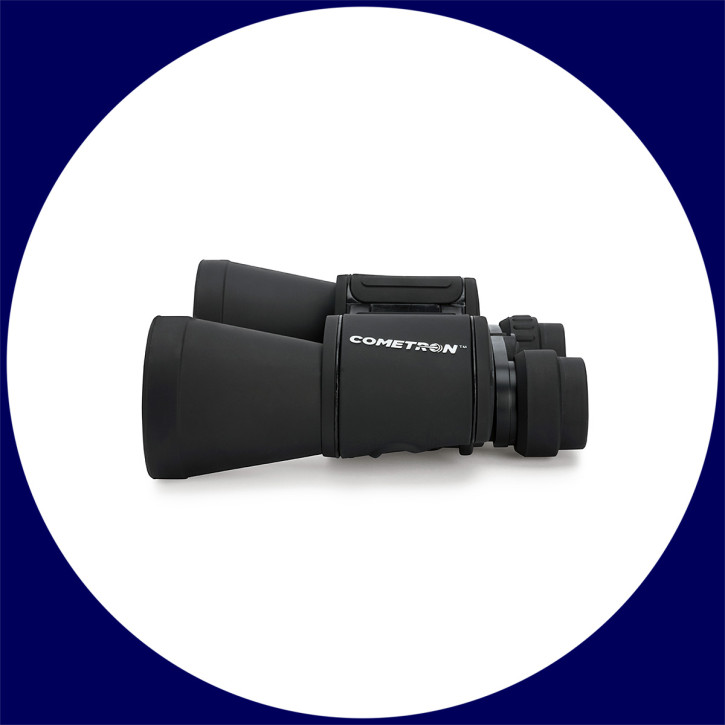
Best for: Entry-level stargazing and casual viewing
- Magnification
- 7x
- Objective diameter
- 50mm
- Field of view
- 6.8°
- Exit pupil
- 7.1mm
- Wide field makes locating targets straightforward
- Lower magnification is easier to hold steady
- Simple alternative to telescope setup
- Less reach than higher-magnification models
Are Celestron Cometron 7×50 Binoculars worth buying on Black Friday 2026?
Yes. Celestron Cometron 7×50 Binoculars are a practical entry point for casual stargazing, with a 6.8° field of view and manageable 7x magnification. The Celestron Cometron 7×50 Binoculars is best for broad sky views rather than close detail on planets.
See today’s Black Friday price on Amazon
#5
Celestron StarSense Explorer LT 80AZ Telescope
The Celestron StarSense Explorer LT 80AZ Telescope is the best beginner telescope for guided backyard observing; its 80mm aperture and smartphone sky guidance simplify target finding.

Best for: First-time telescope owners
- Optical design
- Refractor
- Aperture
- 80mm
- Focal length
- 900mm
- Mount
- Altazimuth
- Smartphone-assisted navigation helps locate targets
- Refractor design is approachable for new owners
- Includes 25mm and 10mm eyepieces
- Smaller aperture gathers less light than larger telescope picks
Is Celestron StarSense Explorer LT 80AZ Telescope worth buying on Black Friday 2026?
Yes. Celestron StarSense Explorer LT 80AZ Telescope gives beginners an accessible 80mm refractor with smartphone-assisted target finding. The included 25mm and 10mm eyepieces support different viewing powers, while the altazimuth mount keeps basic movement intuitive.
See today’s Black Friday price on Amazon
#6 · Top pick
Celestron StarSense Explorer DX 130AZ Telescope
The Celestron StarSense Explorer DX 130AZ Telescope is the best overall telescope for beginner and intermediate backyard observers; its 130mm aperture gathers more light than an 80mm refractor.

Best for: All-around backyard astronomy
- Optical design
- Newtonian reflector
- Aperture
- 130mm
- Focal length
- 650mm
- Mount
- Altazimuth
- Large aperture for the category
- Smartphone-assisted target finding
- Includes 25mm and 10mm eyepieces
- Reflector optics need occasional alignment checks
Is Celestron StarSense Explorer DX 130AZ Telescope worth buying on Black Friday 2026?
Yes. Celestron StarSense Explorer DX 130AZ Telescope is a strong all-around choice for guided backyard astronomy. The Celestron StarSense Explorer DX 130AZ Telescope's 130mm aperture and 650mm focal length balance light gathering with broad views, and the smartphone-assisted system helps users find celestial targets.
See today’s Black Friday price on Amazon
#7
Celestron NexStar 6SE Telescope
The Celestron NexStar 6SE Telescope is the best premium pick for observers who want computerized tracking; its 150mm aperture pairs with a GoTo mount that locates celestial objects.

Best for: Computerized observing and detailed views
- Optical design
- Schmidt-Cassegrain
- Aperture
- 150mm
- Focal length
- 1500mm
- Mount
- Computerized altazimuth
- Computerized object locating and tracking
- Compact optical tube for a 150mm aperture
- Long focal length supports higher magnification
- Requires power and an alignment routine
Is Celestron NexStar 6SE Telescope worth buying on Black Friday 2026?
Yes. Celestron NexStar 6SE Telescope is a premium option for shoppers who value computerized object locating and tracking. The Celestron NexStar 6SE Telescope's 150mm Schmidt-Cassegrain optics and 1500mm focal length support detailed lunar and planetary observing after the alignment process.
See today’s Black Friday price on Amazon
Are binoculars or a Celestron telescope better for Black Friday 2026?
Celestron binoculars are better for portability and wide views, while Celestron telescopes are better for detailed views of the Moon and planets. Celestron Nature DX 8×42 Binoculars weigh less than a telescope setup and work for wildlife as well as casual skywatching.
A telescope’s larger aperture and higher effective magnification reveal more surface detail on bright objects. Celestron StarSense Explorer DX 130AZ Telescope offers a 130mm aperture, plus smartphone-assisted target finding. For a first astronomy gift, choose based on how the recipient wants to observe: broad views with minimal setup or closer views with more equipment.
Which Celestron binoculars are best for stargazing?
Celestron SkyMaster 15×70 Binoculars are a strong stargazing choice for shoppers who want large objectives and wide binocular views. Their 70mm lenses gather light, and the binocular format presents a broad view of star fields and bright celestial objects.
Celestron Cometron 7×50 Binoculars are an easier handheld starting point, with 7x magnification and a 6.8° field of view. Celestron SkyMaster 20×80 Binoculars offer stronger magnification and 80mm objectives, but their weight makes a sturdy tripod important. Choose Celestron Nature DX 8×42 Binoculars when daytime viewing and travel matter as much as astronomy.
Which Celestron telescope suits a beginner?
Celestron StarSense Explorer LT 80AZ Telescope suits a beginner who wants an uncomplicated refractor and smartphone guidance. The 80mm aperture and altazimuth mount make the setup approachable, while the included 25mm and 10mm eyepieces provide two starting magnifications.
Celestron StarSense Explorer DX 130AZ Telescope is a better fit for shoppers prioritizing additional light gathering and a roomier range of targets. Its smartphone-assisted navigation helps locate objects, while its 130mm aperture provides more light-gathering area than the 80mm option. New observers should also consider storage space and how often the telescope will be transported.
Can binoculars show planets as clearly as telescopes?
Celestron telescopes show more planetary detail than binoculars because telescope optics support higher useful magnification and closer views. Celestron NexStar 6SE Telescope combines a 150mm aperture with a 1500mm focal length for lunar and planetary observing.
Celestron SkyMaster 15×70 Binoculars and Celestron SkyMaster 20×80 Binoculars are better suited to broad views of star fields, the Moon, and bright objects than fine planetary detail. Binoculars remain a comfortable choice for quick observing, and both eyes see the view. Shoppers focused on planets should favor a telescope; shoppers who value simplicity should favor binoculars.
What should I compare before choosing a Black Friday astronomy gift?
Aperture, magnification, portability, and setup explain the biggest differences among these 7 Celestron picks. Celestron Nature DX 8×42 Binoculars prioritize a travel-friendly format; Celestron StarSense Explorer DX 130AZ Telescope prioritizes telescope aperture and guided target finding.
Check whether the recipient has a steady tripod, space to store a telescope, and interest in learning alignment or navigation. Celestron NexStar 6SE Telescope adds computerized locating, but needs power and an alignment routine. Celestron Cometron 7×50 Binoculars keep the experience simple. For Black Friday 2026, compare product contents and model names carefully so the selected optical design and accessories match the intended use.
Buying Guide
Choose binoculars for portability
Celestron Nature DX 8×42 Binoculars are a sensible travel choice because their 8x magnification works for wildlife, scenery, and broad night-sky viewing. Select larger 70mm or 80mm binoculars for astronomy from a fixed position, and plan for a tripod when using stronger magnification.
Choose a telescope for closer views
Celestron StarSense Explorer DX 130AZ Telescope offers a 130mm aperture for backyard astronomy, while Celestron NexStar 6SE Telescope adds computerized object locating and a 150mm aperture. Telescope picks suit shoppers who prioritize lunar and planetary detail over quick setup.
Match the setup to the observer
Celestron Cometron 7×50 Binoculars are simple to pick up and use, while Celestron NexStar 6SE Telescope requires power and alignment. Celestron StarSense Explorer LT 80AZ Telescope adds phone-guided target finding for a more supported first telescope experience.
Compare the included viewing equipment
Celestron StarSense Explorer LT 80AZ Telescope and Celestron StarSense Explorer DX 130AZ Telescope include 25mm and 10mm eyepieces. Confirm the exact model and included accessories before checkout, then consider whether a tripod, power supply, or carrying case belongs on the gift list.
FAQ
Are binoculars better than a telescope for beginners?
Celestron Cometron 7×50 Binoculars are simpler for a beginner who wants broad views without telescope alignment. Celestron StarSense Explorer LT 80AZ Telescope is a better beginner choice for closer lunar and planetary views, with an 80mm aperture and smartphone-assisted target finding.
Which Celestron binoculars are best for astronomy?
Celestron SkyMaster 15×70 Binoculars are a strong astronomy option, with 15x magnification and 70mm objectives for bright wide-field views. Use a stable tripod for comfortable observing. Celestron Cometron 7×50 Binoculars are easier to hold by hand.
Is a 130mm Celestron telescope good for beginners?
Yes. Celestron StarSense Explorer DX 130AZ Telescope combines a 130mm aperture with smartphone-assisted target finding, making it a versatile backyard choice. The reflector design needs occasional alignment checks, so beginners should be comfortable learning basic telescope care.
Are Celestron SkyMaster 20×80 Binoculars good for handheld use?
Celestron SkyMaster 20×80 Binoculars are not the best choice for extended handheld viewing. Their 20x magnification and 80mm objectives produce a large, heavy binocular, so a sturdy tripod is recommended for stable views of the night sky.
Which Celestron telescope has computerized tracking?
Celestron NexStar 6SE Telescope has a computerized altazimuth GoTo mount that locates and tracks celestial objects after alignment. Its 150mm aperture and 1500mm focal length suit shoppers who want guided observing and detailed views of the Moon and planets.
Which Celestron binoculars are best for travel?
Celestron Nature DX 8×42 Binoculars are the best travel pick in this guide because their 8x magnification supports wildlife viewing, scenery, and casual skywatching. The waterproof construction adds reassurance for outdoor trips without the bulk of large astronomy binoculars.