

As an Amazon Associate we earn from qualifying purchases.
- Best overall: Celestron NexStar 6SE Computerized Telescope
- Best budget: Vortex Diamondback HD 8×42 Binoculars
- Best premium: Celestron NexStar 8SE Computerized Telescope
- Best for travel: Vortex Diamondback HD 8×42 Binoculars
- Celestron NexStar telescopes are computerized instruments for locating and tracking celestial objects; Vortex Diamondback HD binoculars are portable tools for wide-field viewing.
- The Celestron NexStar 6SE Computerized Telescope is a versatile choice for serious beginner astronomy, with a 150 mm aperture.
- The Vortex Diamondback HD 8×42 Binoculars suit travel and wildlife viewing, pairing 8x magnification with 42 mm objective lenses.
- Choose by intended use first: a telescope for detailed sky observation, or binoculars for handheld views on land and under the night sky.
Celestron NexStar telescopes and Vortex Diamondback HD binoculars serve different needs, so the right Black Friday 2026 pick depends on what you want to see. NexStar models use computerized mounts to help locate celestial objects. Diamondback HD models offer portable, handheld viewing for wildlife, landscapes and wide views of the sky. We researched and compared specs, reviews and owner feedback to make the differences easier to judge.
For astronomy with tracking, start with the Celestron NexStar 6SE Computerized Telescope; its 150 mm aperture offers a strong balance of capability and manageability. For an easy-to-carry all-around pair, the Vortex Diamondback HD 8×42 Binoculars are our Best bet. The guide below also covers compact and premium telescope choices, higher-magnification binoculars, key specifications and what to prioritize while shopping.
How We Picked
- Compared published aperture, objective-lens size, magnification and optical designs to clarify what each product is built to do.
- Reviewed owner feedback and product documentation for setup demands, portability and everyday usability.
- Separated computerized telescopes from handheld binoculars rather than treating the two categories as interchangeable.
- Considered which models make sense for beginner astronomy, detailed observation, travel and wildlife viewing.
- Prioritized clear specifications and practical tradeoffs shoppers can use to compare Black Friday 2026 options.
Comparison Table
| Product | Best for | Aperture / objective | Power / focal length | Format |
|---|---|---|---|---|
| Celestron NexStar 4SE Computerized Telescope | Compact astronomy | 102 mm aperture | 1,325 mm focal length | Computerized Maksutov-Cassegrain |
| Celestron NexStar 5SE Computerized Telescope | Beginner telescope upgrade | 125 mm aperture | 1,250 mm focal length | Computerized Schmidt-Cassegrain |
| Celestron NexStar 6SE Computerized Telescope | Versatile backyard astronomy | 150 mm aperture | 1,500 mm focal length | Computerized Schmidt-Cassegrain |
| Celestron NexStar 8SE Computerized Telescope | Premium aperture | 203.2 mm aperture | 2,032 mm focal length | Computerized Schmidt-Cassegrain |
| Vortex Diamondback HD 8×42 Binoculars | Travel and wide views | 42 mm objectives | 8x magnification | Handheld binoculars |
| Vortex Diamondback HD 10×42 Binoculars | Distant wildlife | 42 mm objectives | 10x magnification | Handheld binoculars |
| Vortex Diamondback HD 10×50 Binoculars | Outdoor and low-light viewing | 50 mm objectives | 10x magnification | Handheld binoculars |
| Vortex Diamondback HD 12×50 Binoculars | Distant subjects | 50 mm objectives | 12x magnification | Handheld binoculars |
Best Picks Reviewed
#1
Celestron NexStar 4SE Computerized Telescope
The Celestron NexStar 4SE Computerized Telescope is the best compact computerized telescope for beginners with limited storage, combining a 102 mm aperture with a GoTo mount that helps locate celestial objects.

Best for: Compact astronomy and smaller storage spaces
- Aperture
- 102 mm
- Focal length
- 1,325 mm
- Focal ratio
- f/13
- Compact Maksutov-Cassegrain optical design
- Computerized object locating and tracking
- Useful for Moon and bright-planet viewing
- Smaller aperture gathers less light than larger NexStar models
Is the Celestron NexStar 4SE Computerized Telescope worth buying on Black Friday 2026?
The Celestron NexStar 4SE Computerized Telescope is worth considering for a compact computerized astronomy setup. The Celestron NexStar 4SE Computerized Telescope's 102 mm aperture and 1,325 mm focal length suit lunar and bright-planet observation, while the GoTo mount helps users find objects.
See today’s Black Friday price on Amazon
#2
Celestron NexStar 5SE Computerized Telescope
The Celestron NexStar 5SE Computerized Telescope is the best middle-ground telescope for newcomers who want computerized tracking and a 125 mm aperture in a manageable package.
Best for: Beginner astronomers seeking a capable step up
- Aperture
- 125 mm
- Focal length
- 1,250 mm
- Focal ratio
- f/10
- Computerized GoTo mount supports object finding
- More aperture than the 4SE
- Compact Schmidt-Cassegrain tube
- Still needs careful alignment and a steady power source
Is the Celestron NexStar 5SE Computerized Telescope worth buying on Black Friday 2026?
The Celestron NexStar 5SE Computerized Telescope is a strong choice for beginners who want tracking without moving to the largest model. The Celestron NexStar 5SE Computerized Telescope's 125 mm aperture and 1,250 mm focal length support detailed lunar and planetary observation.
See today’s Black Friday price on Amazon
#3 · Top pick
Celestron NexStar 6SE Computerized Telescope
The Celestron NexStar 6SE Computerized Telescope is the best overall astronomy pick for curious beginners and intermediate observers, with a 150 mm aperture and computerized tracking.
Best for: Versatile backyard astronomy
- Aperture
- 150 mm
- Focal length
- 1,500 mm
- Focal ratio
- f/10
- Good balance of aperture and portability
- Computerized mount locates and tracks objects
- Schmidt-Cassegrain design keeps the tube compact
- Requires mount setup and alignment before observing
Is the Celestron NexStar 6SE Computerized Telescope worth buying on Black Friday 2026?
The Celestron NexStar 6SE Computerized Telescope is worth buying for shoppers who want one telescope for a range of astronomy sessions. The Celestron NexStar 6SE Computerized Telescope's 150 mm aperture, 1,500 mm focal length and computerized tracking make it a balanced backyard option.
See today’s Black Friday price on Amazon
#4
Celestron NexStar 8SE Computerized Telescope
The Celestron NexStar 8SE Computerized Telescope is the best premium choice for committed observers seeking an 8-inch aperture and computerized object tracking.
Best for: Experienced observers prioritizing aperture
- Aperture
- 203.2 mm
- Focal length
- 2,032 mm
- Focal ratio
- f/10
- Largest aperture in this Celestron selection
- Computerized GoTo tracking
- Compact optical tube for its aperture
- Larger, heavier setup needs more storage and transport planning
Is the Celestron NexStar 8SE Computerized Telescope worth buying on Black Friday 2026?
The Celestron NexStar 8SE Computerized Telescope is worth considering for committed sky observers who prioritize aperture. The Celestron NexStar 8SE Computerized Telescope's 203.2 mm primary mirror gathers more light than the smaller NexStar options, and its computerized mount helps locate and follow targets.
See today’s Black Friday price on Amazon
#5
Vortex Diamondback HD 8×42 Binoculars
The Vortex Diamondback HD 8×42 Binoculars are the best all-around pair for travel and wildlife viewers, with 8x magnification and 42 mm objective lenses.
Best for: Travel, wildlife and general outdoor viewing
- Magnification
- 8x
- Objective lens
- 42 mm
- Field of view
- 420 ft at 1,000 yd
- Wide field of view for scanning
- Manageable handheld magnification
- Portable format for outdoor trips
- Does not provide telescope-level magnification or tracking
Are the Vortex Diamondback HD 8×42 Binoculars worth buying on Black Friday 2026?
The Vortex Diamondback HD 8×42 Binoculars are worth buying for general outdoor use and casual sky watching. Their 8x magnification is comfortable for handheld viewing, while the 42 mm objectives and 420-foot field of view support broad scenes.
See today’s Black Friday price on Amazon
#6
Vortex Diamondback HD 10×42 Binoculars
The Vortex Diamondback HD 10×42 Binoculars are the best higher-power everyday option for wildlife viewers who want 10x magnification with 42 mm objectives.
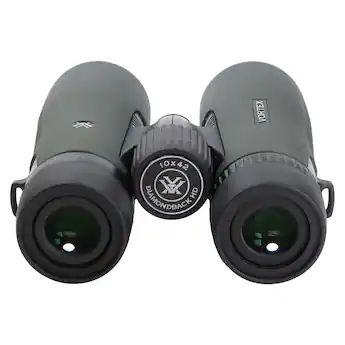
Best for: Wildlife observation at greater distance
- Magnification
- 10x
- Objective lens
- 42 mm
- Field of view
- 315 ft at 1,000 yd
- More magnification than an 8×42 pair
- 42 mm objectives suit all-around outdoor use
- Useful for distant wildlife and viewing details
- Narrower field of view than the 8×42 model
Are the Vortex Diamondback HD 10×42 Binoculars worth buying on Black Friday 2026?
The Vortex Diamondback HD 10×42 Binoculars are a good fit for viewers who value extra reach for wildlife and outdoor details. The 10x magnification brings distant subjects closer, while the 42 mm objectives preserve a versatile, portable format.
See today’s Black Friday price on Amazon
#7
Vortex Diamondback HD 10×50 Binoculars
The Vortex Diamondback HD 10×50 Binoculars are the best large-objective choice for viewers who want 10x magnification and 50 mm lenses for outdoor and low-light observation.
Best for: Longer viewing sessions and dimmer scenes
- Magnification
- 10x
- Objective lens
- 50 mm
- Field of view
- 315 ft at 1,000 yd
- 50 mm objectives collect more light than 42 mm models
- 10x power offers useful detail at a distance
- Suitable for wildlife and broad night-sky viewing
- Larger objectives add bulk for travel
Are the Vortex Diamondback HD 10×50 Binoculars worth buying on Black Friday 2026?
The Vortex Diamondback HD 10×50 Binoculars are worth considering for viewers who want larger objectives without moving to a telescope. Their 10x magnification and 50 mm lenses suit distant wildlife, landscape details and broad views of the night sky.
See today’s Black Friday price on Amazon
#8
Vortex Diamondback HD 12×50 Binoculars
The Vortex Diamondback HD 12×50 Binoculars are the best high-magnification handheld pick for viewers seeking 12x power and 50 mm objectives for distant subjects.
Best for: Distant wildlife and stationary viewing
- Magnification
- 12x
- Objective lens
- 50 mm
- Field of view
- 273 ft at 1,000 yd
- Highest magnification in this binocular selection
- 50 mm objectives support light gathering
- Detailed views of distant subjects
- Higher magnification is harder to hold steady
Are the Vortex Diamondback HD 12×50 Binoculars worth buying on Black Friday 2026?
The Vortex Diamondback HD 12×50 Binoculars are a worthwhile fit for viewers who need extra reach and often observe from a stable position. Their 12x power and 50 mm objectives bring distant details forward, though the narrower view asks for steadier handling.
See today’s Black Friday price on Amazon
Are Celestron NexStar telescopes or Vortex Diamondback binoculars better?
Celestron NexStar telescopes are better for magnified astronomy, while Vortex Diamondback HD binoculars are better for portable, wide-field viewing. The NexStar range includes computerized mounts that locate and track celestial objects, with apertures from 102 mm on the 4SE to 203.2 mm on the 8SE. Diamondback HD binoculars trade tracking and telescope magnification for a handheld format.
A telescope is the right direction if the Moon, planets and deep-sky targets are the priority. Binoculars are more practical for hiking, wildlife and quick looks at the sky. The Vortex Diamondback HD 8×42 Binoculars are also easier to carry and use without a mount. Treat the product families as alternatives for different activities, not direct substitutes.
Which Celestron NexStar telescope is best for beginners?
The Celestron NexStar 5SE Computerized Telescope is a strong beginner choice, with a 125 mm aperture and a computerized mount. The Celestron NexStar 4SE Computerized Telescope has a smaller 102 mm aperture and a compact optical tube, making it a sensible fit where storage or transport is a priority. Both models help users locate objects rather than relying only on manual searching.
Shoppers who want more light-gathering capacity can move up to the Celestron NexStar 6SE Computerized Telescope, with its 150 mm aperture. Any computerized telescope needs setup, alignment and power, so consider whether that routine suits your observing style. The NexStar 8SE brings a larger 203.2 mm aperture for dedicated observers, with a correspondingly larger setup.
Which Vortex Diamondback HD binoculars are best for travel?
The Vortex Diamondback HD 8×42 Binoculars are the best travel pick, combining 8x magnification, 42 mm objectives and a 420-foot field of view at 1,000 yards. The moderate magnification makes it easier to scan wide scenes and follow moving subjects, while the handheld design fits outdoor outings without a tripod.
Choose the Vortex Diamondback HD 10×42 Binoculars if extra reach for distant wildlife matters more than a wider view. The Vortex Diamondback HD 10×50 Binoculars and Vortex Diamondback HD 12×50 Binoculars use larger 50 mm objectives, but their bigger format adds bulk. For frequent travel, the 8×42 configuration is the most balanced place to start.
Can Vortex Diamondback HD binoculars work for astronomy?
Vortex Diamondback HD binoculars can show broad night-sky views, and the 8×42 and 10×50 configurations offer useful combinations of handheld power and objective size. Binoculars are suitable for scanning star fields and taking casual looks at the Moon, but they do not provide a computerized mount or the detailed magnification of a NexStar telescope.
For astronomy with object locating and tracking, the Celestron NexStar 6SE Computerized Telescope is a more suitable choice, with a 150 mm aperture and 1,500 mm focal length. A pair of binoculars is still a useful companion for learning the sky or packing light. Choose based on whether quick wide views or detailed, mounted observation matters more.
What should shoppers compare for Black Friday 2026?
Black Friday 2026 shoppers should compare aperture, portability and setup requirements before choosing between these 8 products. Telescope aperture affects how much light an instrument gathers, while binocular objective size and magnification shape handheld views. A larger specification alone does not settle the decision; the intended activity and ease of use matter just as much.
Check that the chosen product includes the accessories and support you need, and compare the exact model name across listings. Telescope shoppers should account for alignment, mount space and power needs. Binocular shoppers should consider weight, magnification and field of view. These practical checks help narrow the choice to a tool you will use often.
Buying Guide
Start with what you want to observe
Celestron NexStar telescopes suit astronomy, while Vortex Diamondback HD binoculars suit portable viewing on land and under the night sky. Decide whether you want computerized tracking or a handheld tool before comparing model numbers.
Compare aperture and objective size
The Celestron NexStar 6SE has a 150 mm aperture, while Vortex Diamondback HD models use 42 mm or 50 mm objectives. Telescope and binocular figures describe different instruments, so compare them within each product category.
Think about carrying and storage
The Vortex Diamondback HD 8×42 Binoculars are a compact travel-friendly format. Celestron NexStar telescopes need room for the optical tube and mount, and larger models such as the 8SE require more transport planning.
Choose binocular magnification carefully
The Vortex Diamondback HD 8×42 Binoculars offer a wide 420-foot field of view at 1,000 yards. The 10×42 and 12×50 versions bring distant subjects closer, but higher magnification is harder to hold steady.
Check listing details before buying
For Black Friday 2026, match the full model name and specifications before choosing a listing. Confirm included accessories, seller information, warranty details and return terms so the selected setup fits your needs.
FAQ
Celestron NexStar vs Vortex Diamondback: which is better for astronomy?
Celestron NexStar telescopes are better for detailed astronomy because models such as the 150 mm NexStar 6SE include computerized object locating and tracking. Vortex Diamondback HD binoculars suit wide sky views and casual stargazing, but they do not provide a telescope mount or equivalent magnification.
Which Celestron NexStar model is best overall?
The Celestron NexStar 6SE Computerized Telescope is the best all-around choice in this guide. Its 150 mm aperture and computerized tracking balance astronomy capability with a manageable format, making it a strong fit for beginners and observers ready to expand their viewing.
Are 8×42 or 10×42 binoculars better for wildlife?
The Vortex Diamondback HD 8×42 Binoculars suit scanning and moving wildlife, with a 420-foot field of view at 1,000 yards. The Vortex Diamondback HD 10×42 Binoculars provide more reach, with 10x magnification and a narrower 315-foot field of view.
Are 10×50 binoculars good for stargazing?
The Vortex Diamondback HD 10×50 Binoculars are a useful option for broad night-sky viewing. Their 10x magnification and 50 mm objectives work well for scanning star fields, but the binoculars are handheld and do not match the tracking or detailed viewing of a Celestron NexStar telescope.
Is the Celestron NexStar 8SE a good premium telescope?
The Celestron NexStar 8SE Computerized Telescope is a strong premium pick for observers who prioritize aperture. Its 203.2 mm mirror and computerized tracking support detailed astronomy, while its larger setup calls for more storage space and transport planning than the smaller NexStar models.
What is the best Vortex Diamondback HD model for travel?
The Vortex Diamondback HD 8×42 Binoculars are the best travel choice in this selection. Their 8x magnification, 42 mm objectives and 420-foot field of view at 1,000 yards make them useful for outdoor viewing without the size or setup of a telescope.