

As an Amazon Associate we earn from qualifying purchases.
- Best overall: KEF LS50 Meta Bookshelf Speakers
- Best budget: Q Acoustics 3030i Bookshelf Speakers
- Best premium: KEF LS50 Meta Bookshelf Speakers
- Q Acoustics 5020 Bookshelf Speakers: Wharfedale Diamond 12.2 Bookshelf Speakers
- KEF LS50 Meta prioritizes detailed, controlled sound from its 12th-generation Uni-Q driver.
- Q Acoustics 3030i offers a larger 6.5-inch driver and a more accessible route to full bookshelf-speaker sound.
- Both speakers are passive and need a separate amplifier or receiver.
- KEF Q350, Q Acoustics 5020, ELAC Debut 2.0 B6.2, Wharfedale Diamond 12.2 and JBL Stage A130 offer distinct alternatives.
The KEF LS50 Meta is the more refinement-focused speaker, while the Q Acoustics 3030i is the value-minded choice with a larger 6.5-inch bass driver. For Black Friday 2026, the right pick comes down to room size, amplifier capability and whether you prioritize soundstage precision or fuller, room-filling output.
I researched and compared specs, reviews and owner feedback to identify the strengths of both models and five relevant alternatives. On paper, the KEF LS50 Meta has 85 dB sensitivity and an 8-ohm nominal impedance; the Q Acoustics 3030i has 88 dB sensitivity and a 6-ohm nominal impedance. Both are passive bookshelf speakers, so plan for a separate amplifier.
How We Picked
- Compared published driver configurations, frequency response, sensitivity and nominal impedance.
- Considered owner feedback and review consensus about clarity, bass presentation and placement needs.
- Prioritized models that suit different room sizes, budgets and listening preferences.
- Checked whether each speaker is passive and requires a separate amplifier or receiver.
- Selected alternatives with distinct strengths rather than treating similar specifications as interchangeable.
Comparison Table
| Product | Best for | Sensitivity | Impedance | Frequency response |
|---|---|---|---|---|
| KEF LS50 Meta Bookshelf Speakers | Premium imaging | 85 dB | 8 ohms nominal | 79 Hz–28 kHz |
| Q Acoustics 3030i Bookshelf Speakers | Value and larger driver | 88 dB | 6 ohms | 46 Hz–30 kHz |
| KEF Q350 Bookshelf Speakers | Uni-Q at a lower tier | 87 dB | 8 ohms | 63 Hz–28 kHz |
| Q Acoustics 5020 Bookshelf Speakers | Compact modern setup | 88 dB | 6 ohms | 53 Hz–30 kHz |
| ELAC Debut 2.0 B6.2 Bookshelf Speakers | Large woofer on a budget | 87 dB | 6 ohms | 44 Hz–35 kHz |
| Wharfedale Diamond 12.2 Bookshelf Speakers | Versatile systems | 88 dB | 8 ohms nominal | 50 Hz–20 kHz |
| JBL Stage A130 Bookshelf Speakers | Smaller rooms | 86 dB | 6 ohms | 55 Hz–40 kHz |
Best Picks Reviewed
#1 · Top pick
KEF LS50 Meta Bookshelf Speakers
The KEF LS50 Meta Bookshelf Speakers are the best premium choice for listeners seeking precise imaging and refined detail. Their 12th-generation Uni-Q driver combines an aluminum tweeter and 5.25-inch mid/bass driver in one point-source arrangement.

Best for: Precise stereo imaging and premium two-channel systems
- Driver
- 5.25-inch Uni-Q
- Sensitivity
- 85 dB
- Impedance
- 8 ohms nominal
- Frequency response
- 79 Hz–28 kHz
- Cohesive Uni-Q driver design
- Detailed, spacious presentation
- Solid cabinet construction
- Needs a capable amplifier
- Limited deep bass without a subwoofer
Is the KEF LS50 Meta Bookshelf Speakers worth buying on Black Friday 2026?
The KEF LS50 Meta Bookshelf Speakers are worth considering for a premium stereo system focused on imaging and clarity. The 85 dB sensitivity and 8-ohm nominal impedance make amplifier matching important; a subwoofer adds deeper bass.
See today’s Black Friday price on Amazon
#2
Q Acoustics 3030i Bookshelf Speakers
The Q Acoustics 3030i Bookshelf Speakers are the best value choice for listeners who want substantial bookshelf sound without stepping up to a premium monitor. The 6.5-inch mid/bass driver and 88 dB sensitivity support a fuller presentation than many compact speakers.
Best for: Value-focused music and home audio systems
- Driver
- 6.5-inch mid/bass
- Sensitivity
- 88 dB
- Impedance
- 6 ohms
- Frequency response
- 46 Hz–30 kHz
- Large driver for its class
- Generous bass response for a bookshelf speaker
- Flexible placement options
- Cabinet is larger than compact bookshelf models
- Bass output still benefits from a subwoofer for films
Is the Q Acoustics 3030i Bookshelf Speakers worth buying on Black Friday 2026?
The Q Acoustics 3030i Bookshelf Speakers are a strong choice for listeners seeking an accessible passive speaker with a 6.5-inch driver and 88 dB sensitivity. The larger cabinet needs shelf or stand space, and a separate amplifier is required.
See today’s Black Friday price on Amazon
#3
KEF Q350 Bookshelf Speakers
The KEF Q350 Bookshelf Speakers are the best alternative for listeners who want KEF’s Uni-Q presentation at a more approachable tier. Each speaker uses a 6.5-inch Uni-Q driver and has 87 dB sensitivity.
Best for: KEF-style imaging in a larger bookshelf speaker
- Driver
- 6.5-inch Uni-Q
- Sensitivity
- 87 dB
- Impedance
- 8 ohms
- Frequency response
- 63 Hz–28 kHz
- Uni-Q driver supports broad stereo imaging
- Larger driver than the LS50 Meta
- Suitable for music and home theater use
- Cabinet takes up more room than compact monitors
- A subwoofer extends movie bass
Is the KEF Q350 Bookshelf Speakers worth buying on Black Friday 2026?
The KEF Q350 Bookshelf Speakers are worth considering when Uni-Q imaging matters more than the LS50 Meta’s premium refinement. The 6.5-inch driver and 87 dB sensitivity suit varied systems, while a separate amplifier remains necessary.
See today’s Black Friday price on Amazon
#4
Q Acoustics 5020 Bookshelf Speakers
The Q Acoustics 5020 Bookshelf Speakers are the best modern compact alternative for listeners who want a polished two-way design with a 5-inch mid/bass driver. Their 88 dB sensitivity makes them a practical pairing for many amplifiers.
Best for: Compact rooms and contemporary two-channel setups
- Driver
- 5-inch mid/bass
- Sensitivity
- 88 dB
- Impedance
- 6 ohms
- Frequency response
- 53 Hz–30 kHz
- Smaller driver and cabinet than the 3030i
- High stated sensitivity
- Well suited to stand mounting
- Less driver area than the 3030i
- Deep bass calls for a subwoofer
Is the Q Acoustics 5020 Bookshelf Speakers worth buying on Black Friday 2026?
The Q Acoustics 5020 Bookshelf Speakers are worth considering for a compact system that still needs a full two-way speaker design. Their 5-inch driver and 88 dB sensitivity suit smaller rooms, with a subwoofer useful for deeper bass.
See today’s Black Friday price on Amazon
#5
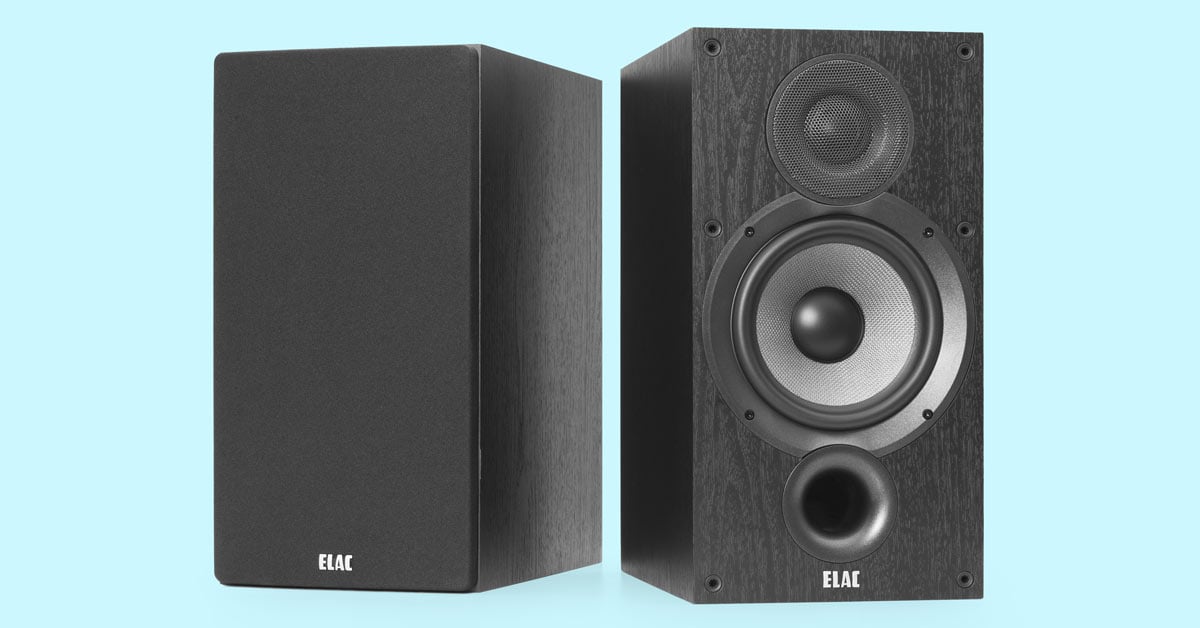
ELAC Debut 2.0 B6.2 Bookshelf Speakers
The ELAC Debut 2.0 B6.2 Bookshelf Speakers are the best choice for listeners who value a substantial cabinet and a 6.5-inch woofer at an entry-level speaker tier. Their 87 dB sensitivity gives a useful reference point for amplifier matching.
Best for: Full-bodied sound in a budget-conscious stereo system
- Driver
- 6.5-inch aramid-fiber woofer
- Sensitivity
- 87 dB
- Impedance
- 6 ohms
- Frequency response
- 44 Hz–35 kHz
- Large woofer for bookshelf listening
- Wide published frequency range
- Works in stereo or home theater systems
- Large enclosure needs suitable placement
- Passive design needs amplification
Are the ELAC Debut 2.0 B6.2 Bookshelf Speakers worth buying on Black Friday 2026?
The ELAC Debut 2.0 B6.2 Bookshelf Speakers are worth considering for listeners who want a larger woofer and broad published frequency response. Their 6-ohm impedance calls for an amplifier rated for that load.
See today’s Black Friday price on Amazon
#6
Wharfedale Diamond 12.2 Bookshelf Speakers
The Wharfedale Diamond 12.2 Bookshelf Speakers are the best choice for listeners seeking a balanced, versatile speaker with an 8-ohm nominal impedance. A 6.5-inch Klarity cone driver gives the model a strong foundation for stereo music and home theater.
Best for: Versatile listening with straightforward amplifier matching
- Driver
- 6.5-inch Klarity cone
- Sensitivity
- 88 dB
- Impedance
- 8 ohms nominal
- Frequency response
- 50 Hz–20 kHz
- 8-ohm nominal impedance
- Large mid/bass driver
- Suitable for music and movie systems
- Cabinet is not especially compact
- Bass extension has limits in larger rooms
Are the Wharfedale Diamond 12.2 Bookshelf Speakers worth buying on Black Friday 2026?
The Wharfedale Diamond 12.2 Bookshelf Speakers are worth considering for a versatile stereo or home theater setup. Their 6.5-inch driver and 8-ohm nominal impedance suit many systems, while a subwoofer helps with deep effects.
See today’s Black Friday price on Amazon
#7
JBL Stage A130 Bookshelf Speakers
The JBL Stage A130 Bookshelf Speakers are the best pick for listeners who want a compact two-way speaker from a familiar audio brand. Their 5.25-inch woofer and 86 dB sensitivity suit smaller listening spaces and mixed music use.
Best for: Compact systems and smaller listening spaces
- Driver
- 5.25-inch woofer
- Sensitivity
- 86 dB
- Impedance
- 6 ohms
- Frequency response
- 55 Hz–40 kHz
- Compact two-way format
- Wide stated high-frequency response
- Flexible as stereo or front-channel speakers
- Smaller woofer than the 3030i
- Separate amplifier required
Are the JBL Stage A130 Bookshelf Speakers worth buying on Black Friday 2026?
The JBL Stage A130 Bookshelf Speakers are worth considering for a compact passive setup built for music or home theater. The 5.25-inch woofer keeps the cabinet manageable, while a subwoofer helps supply stronger low bass.
See today’s Black Friday price on Amazon
Which is better, KEF LS50 Meta or Q Acoustics 3030i?
The KEF LS50 Meta Bookshelf Speakers suit precision-focused listening, while the Q Acoustics 3030i Bookshelf Speakers offer a larger 6.5-inch driver and higher 88 dB sensitivity. Neither speaker is a universal winner; system fit and listening priorities matter more than a single specification.
The KEF’s Uni-Q driver places the tweeter at the acoustic center of the mid/bass driver. That design supports a coherent stereo image and helps explain the KEF’s reputation for focused detail. The Q Acoustics model uses a conventional two-way layout, with a larger cone and generous cabinet volume aimed at a fuller presentation.
The short version: choose KEF for imaging and refinement, and Q Acoustics for value and stronger bookshelf-scale bass. Both speakers benefit from careful placement and a suitable amplifier.
Which speaker works better in a small or medium room?
The Q Acoustics 3030i Bookshelf Speakers suit medium rooms, while the KEF LS50 Meta Bookshelf Speakers suit listeners who prioritize focused imaging in a carefully arranged two-channel space. Both need room around the cabinet for balanced sound.
Room size alone does not decide speaker fit. The Q Acoustics 3030i has a larger cabinet and 6.5-inch driver, so it needs more shelf or stand space than compact models such as the Q Acoustics 5020 or JBL Stage A130. Keep rear-ported speakers clear of walls and follow the manufacturer’s placement guidance.
For a smaller room, consider listening distance, furniture and bass buildup near walls. A subwoofer can handle the lowest notes while bookshelf speakers focus on midrange and treble. Stands often provide better positioning than a crowded shelf.
What amplifier do KEF LS50 Meta and Q Acoustics 3030i need?
The KEF LS50 Meta Bookshelf Speakers have 85 dB sensitivity and an 8-ohm nominal impedance, while the Q Acoustics 3030i Bookshelf Speakers have 88 dB sensitivity and a 6-ohm impedance. Both require a separate amplifier or receiver.
Sensitivity indicates how much sound pressure a speaker produces from a set amount of amplifier power. The three-decibel difference between these models is a useful comparison, but it does not alone determine loudness or amplifier suitability. Room size, listening distance and desired volume also matter.
Check the amplifier’s supported impedance and power guidance before buying. A stable amplifier with suitable output gives both passive speakers a sound foundation. Keep ventilation clear and connect left and right channels with matching polarity.
Do the published frequency ranges tell you which speaker has deeper bass?
The Q Acoustics 3030i Bookshelf Speakers list a 46 Hz lower frequency figure, compared with 79 Hz for the KEF LS50 Meta Bookshelf Speakers, but published ranges are not a complete measure of bass performance. Manufacturer measurement conditions and tolerance details affect comparisons.
Driver size and enclosure volume help explain why the 3030i can deliver a fuller bass foundation. The LS50 Meta is designed around clarity and imaging as well as frequency extension, and its small cabinet cannot replace a dedicated subwoofer for deep movie effects.
For music, room interaction and speaker placement shape perceived bass as much as the spec sheet. For action films or electronic music with deep low-frequency content, add a compatible subwoofer and use the receiver’s crossover controls.
Which Black Friday 2026 speaker should you choose?
The KEF LS50 Meta Bookshelf Speakers are the premium pick for imaging, and the Q Acoustics 3030i Bookshelf Speakers are the value pick for a larger 6.5-inch driver. Black Friday 2026 is a useful time to compare complete system needs alongside speaker features.
Start by deciding whether you need passive speakers, an amplifier and stands, or a powered all-in-one setup. The seven passive models in this guide all require amplification. If your current receiver is not compatible with the speaker’s impedance, include an appropriate amplifier in your decision.
Choose the KEF LS50 Meta for precise stereo focus; choose the 3030i for a fuller bookshelf format. Consider the KEF Q350, ELAC Debut 2.0 B6.2 or Wharfedale Diamond 12.2 when driver size, room fit or amplifier pairing points to another model.
Buying Guide
Match speaker size to the room
The Q Acoustics 3030i Bookshelf Speakers use a 6.5-inch driver, while the Q Acoustics 5020 Bookshelf Speakers use a 5-inch driver. Compare cabinet dimensions with the space available, and leave room for stands or the manufacturer’s recommended rear clearance.
Check amplifier compatibility
The KEF LS50 Meta Bookshelf Speakers have an 8-ohm nominal impedance and 85 dB sensitivity; the Q Acoustics 3030i Bookshelf Speakers are rated at 6 ohms and 88 dB. Confirm the amplifier supports the chosen load.
Decide whether a subwoofer belongs in the system
The ELAC Debut 2.0 B6.2 Bookshelf Speakers list a 44 Hz lower response figure, while the KEF LS50 Meta Bookshelf Speakers list 79 Hz. A subwoofer can extend low bass for films and bass-heavy music.
Compare the full system, not just speakers
The Wharfedale Diamond 12.2 Bookshelf Speakers and JBL Stage A130 Bookshelf Speakers are passive models, just like the two main picks. Account for amplification, speaker cable, stands and any subwoofer when comparing system value.
FAQ
Is the KEF LS50 Meta better than the Q Acoustics 3030i?
The KEF LS50 Meta Bookshelf Speakers are the better fit for precise imaging and refined detail, while the Q Acoustics 3030i Bookshelf Speakers offer a larger 6.5-inch driver and 88 dB sensitivity. The right choice depends on room, amplifier and listening priorities.
Do the KEF LS50 Meta speakers need an amplifier?
Yes. The KEF LS50 Meta Bookshelf Speakers are passive speakers with 85 dB sensitivity and an 8-ohm nominal impedance. Connect them to a compatible stereo amplifier or receiver, and consider a subwoofer if your system needs deeper bass.
Are Q Acoustics 3030i good for music and movies?
Yes. The Q Acoustics 3030i Bookshelf Speakers use a 6.5-inch mid/bass driver and can serve in stereo music or home theater systems. Add a compatible amplifier, and pair them with a subwoofer for deeper cinematic effects.
Which bookshelf speakers are easiest to drive in this guide?
The Q Acoustics 3030i Bookshelf Speakers, Q Acoustics 5020 Bookshelf Speakers and Wharfedale Diamond 12.2 Bookshelf Speakers each list 88 dB sensitivity. Sensitivity is only one factor; confirm an amplifier’s impedance and power compatibility before choosing.
Should I buy KEF Q350 or Q Acoustics 3030i?
Choose the KEF Q350 Bookshelf Speakers for KEF’s Uni-Q driver layout and 87 dB sensitivity. Choose the Q Acoustics 3030i Bookshelf Speakers for a larger cabinet, 6.5-inch mid/bass driver and 88 dB sensitivity. Both need a separate amplifier.